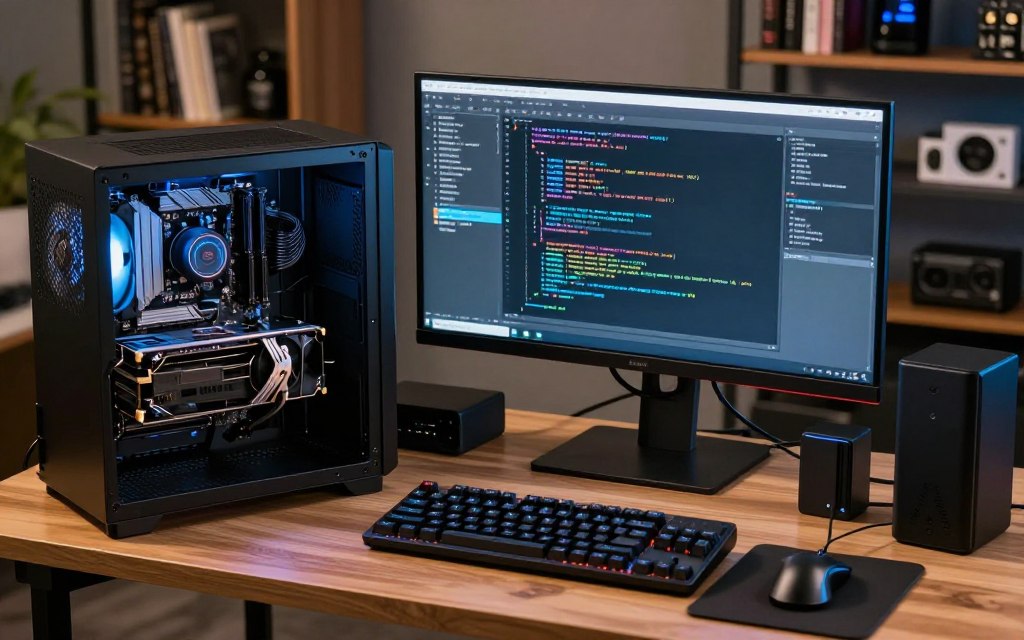

Does computer science include hardware? Computer science focuses on computation, algorithms, and software, but it also studies how devices work. This link between programs and physical machines supports a complete understanding of technology.
The amount of computer science hardware coverage depends on each university, degree focus, and course choices. Computer science courses may explore hardware, while computer engineering usually gives it greater attention.
This article examines hardware in computer science, including computer architecture, digital logic, and embedded systems. It also covers hardware-focused courses, computer science careers, artificial intelligence hardware, and quantum computing.
Key Takeaways
- Computer science primarily focuses on software and algorithms.
- Many programs include hardware components in their curriculum.
- The coverage of hardware varies by university and program.
- Computer engineering emphasizes hardware more than computer science.
- Emerging fields like AI hardware are gaining importance.
Understanding Computer Science as a Discipline
Understanding computer science means learning its basic principles and seeing how they work in real-world situations. The computer science definition includes computation, algorithms, data, programming languages, operating systems, artificial intelligence, databases, networks, and computational system design. Computer science fundamentals cover theoretical, mathematical, and practical areas, so the field goes beyond learning to code.
The Foundations of Computer Science
The foundations of computer science include several key components. Algorithms and data structures guide how computers process and store information, while computational theory explains what computers can compute.
Software development uses programming to apply these theories, while abstraction simplifies complex systems. Problem-solving and system design help students tackle real-world challenges effectively.
Why Students Choose Computer Science in the United States
Many students choose computer science because employers need computing professionals across many sectors. Technology, finance, healthcare, government, manufacturing, entertainment, and research offer flexible career paths.
Students can pursue a computer science degree at the bachelor’s, master’s, or doctoral level. They can customize their education with electives in systems, robotics, computer architecture, embedded computing, or electrical engineering.
| Key Areas | Description | Importance |
|---|---|---|
| Algorithms | Step-by-step procedures for calculations | Essential for problem-solving |
| Data Structures | Ways to organize and store data | Critical for efficient data management |
| Software Development | Process of creating software applications | Key for technology innovation |
| Computational Theory | Study of computational processes | Foundation for understanding limits |
Defining Hardware in the Computing Ecosystem
Hardware forms the physical foundation of computer systems. It includes tangible parts that process, store, transmit, and display information. These computer hardware components include central processing units (CPUs), graphics processing units (GPUs), memory modules, storage drives, and motherboards.
Hardware ranges from small components inside a laptop to large data-center servers and mobile devices. It includes input and output devices, such as keyboards, mice, and monitors. Networking equipment and specialized accelerators also support advanced computing tasks.
What Counts as Computer Hardware
To illustrate this idea, consider the following table of hardware components:
| Component Type | Examples | Function |
|---|---|---|
| Processing Units | CPU, GPU | Execute instructions and perform calculations |
| Memory | RAM, Cache | Store data temporarily for quick access |
| Storage | HDD, SSD | Store data permanently |
| Input Devices | Keyboard, Mouse | Allow user interaction with the computer |
| Output Devices | Monitor, Printer | Display or produce information from the computer |
Hardware vs. Software: Key Differences
Hardware provides the physical structure, while software provides instructions and data. Firmware is software embedded in hardware and helps devices work.
Computer science students study hardware to understand its interaction with software. They examine performance, instruction execution, and memory behavior. The relationship between hardware and software supports efficient computing. A program’s speed, security, energy use, and reliability depend on physical computing systems, including the CPU and memory hierarchy.
For a deeper look at hardware’s role in computing, visit IBM’s Hardware Insights.
Does Computer Science Include Hardware? The Overlap Explained
Many students ask, “does computer science study hardware?” Hardware plays a major role in computer science, although people often overlook it. This connection matters especially in systems computer science, where theory meets real-world systems.
Theoretical Foundations of Hardware in Computer Science
Theoretical foundations explain how hardware works in computer science. Instruction sets, logic operations, and memory models are central to computer architecture in CS. They help students understand processor function and data movement through different storage hierarchies.
Computational models show how real machines limit computing tasks. Processing speed, memory capacity, and power consumption shape software development. This knowledge helps software-focused students optimize their applications.
Practical Hardware Applications in CS Curricula
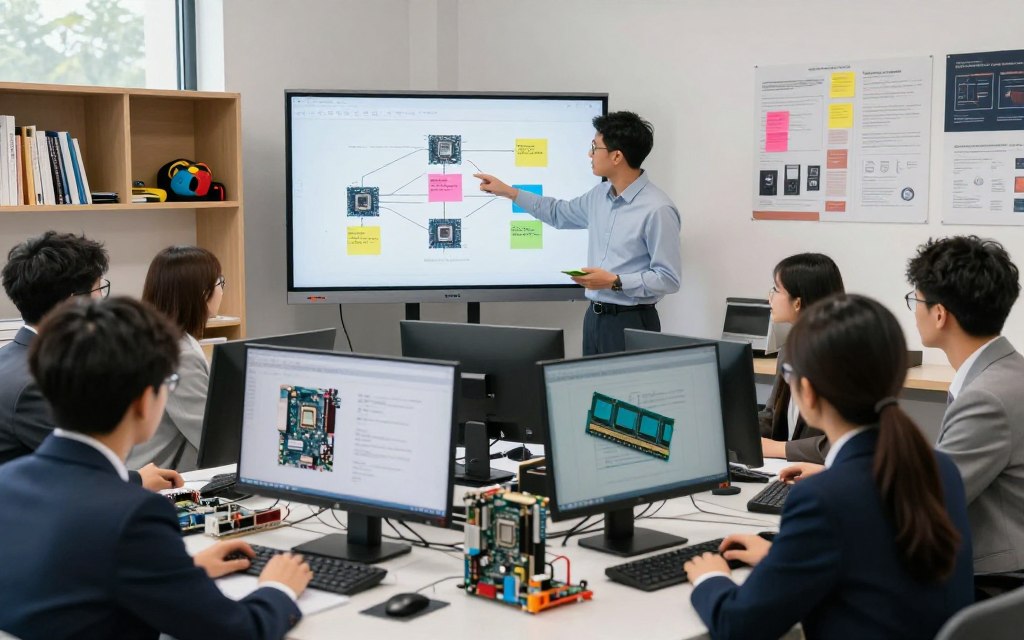
Computer science hardware courses often include labs and practical work. Students study assembly language, operating systems, and computer architecture. Microcontrollers and robotics provide hands-on practice with hardware-software interaction.
Programs use development boards like Arduino and Raspberry Pi to connect programming with physical behavior. These tools make hardware tangible and strengthen learning. Introductory computer science degrees may cover hardware in one or two systems courses, while specialized programs offer advanced study.
Understanding hardware differs from designing electrical components, which aligns more closely with computer engineering. Still, every computer scientist benefits from strong hardware knowledge.
Core Hardware Topics Covered in Computer Science Programs
Students in computer systems courses study hardware concepts that support modern computing. These ideas help them develop efficient software and optimize performance. The topics below often appear in computer science programs, including computer architecture, digital logic, embedded systems, microcontrollers, and CPU design.
Computer Architecture and Organization
Computer architecture explains how a computer’s components are designed and organized. Its key elements include the following:
- Processor Components: These include the CPU, which executes instructions, and various registers that store data temporarily.
- Instruction Sets: This defines the commands the CPU can execute, influencing software efficiency.
- Memory Hierarchies: Understanding caches, RAM, and storage types is vital for optimizing data access.
- Pipelining: This technique allows multiple instruction phases to overlap, enhancing processing speed.
These concepts show how machines execute instructions. They support better software development and performance evaluation.
Digital Logic Design and Circuit Basics
Digital logic forms the foundation of computer systems. Students learn about the following topics:
- Binary Representation: Understanding how data is represented in binary form.
- Boolean Algebra: This mathematical approach is essential for designing logical circuits.
- Logic Gates: These are the building blocks of digital circuits, performing basic operations.
- Combinational and Sequential Circuits: Students explore how these circuits function and their applications.
The depth of this topic may vary. However, it is crucial for students pursuing careers in hardware design.
Embedded Systems and Microcontrollers
Embedded systems integrate computing capabilities into various devices. Students study the following topics:
- Microcontrollers: Small computing units that control appliances, vehicles, and more.
- Real-Time Constraints: Understanding how to meet deadlines in processing tasks.
- Programming Languages: C and C++ are commonly used for programming embedded systems.
Laboratory projects and development boards provide practical experience. They bridge theory and application.
Hardware-Focused Courses in U.S. Computer Science Degrees
Computer science hardware courses help students understand how technology works. They connect theory with practice and support practical learning. Students can explore common titles, required courses, hardware electives, and leading U.S. computer science universities.
Common Course Titles and Descriptions
Students pursuing computer science often study hardware topics. Common choices include a computer architecture course, an embedded systems course, and an operating systems course.
- Computer Organization: Focuses on the structure and behavior of computer systems.
- Computer Architecture: Covers the design and organization of computer systems, including processors and memory.
- Operating Systems: Examines the software that manages hardware resources and provides services for computer programs.
- Embedded Systems: Deals with computer systems that are integrated into larger systems, often with real-time constraints.
- Digital Systems: Introduces students to the fundamentals of digital logic and circuit design.
Examples of Required Hardware Courses
Many computer science programs require at least one hardware-focused course. Common requirements include an operating systems course, computer organization, and digital logic design.
- Computer Organization
- Operating Systems
- Digital Logic Design
Examples of Elective Hardware Courses
In addition to required courses, students can choose hardware electives to build deeper knowledge. Popular options include Advanced Computer Architecture, Robotics, Embedded Computing, FPGA Programming, and High-Performance Computing.
- Advanced Computer Architecture
- Robotics
- Embedded Computing
- FPGA Programming
- High-Performance Computing
Students should review course descriptions, prerequisites, and laboratory requirements before choosing classes. This helps them match their choices with career goals.
Top U.S. Universities Offering Hardware-Rich CS Programs
Several universities in the United States are renowned for hardware-focused computer science programs. The table highlights notable U.S. computer science universities and their specializations.
| University | Specialization | Notable Programs |
|---|---|---|
| Massachusetts Institute of Technology | Systems and Architecture | Robotics, Embedded Systems |
| Stanford University | Computer Architecture | Hardware-Software Co-Design |
| Carnegie Mellon University | Embedded Computing | Robotics, Digital Systems |
| University of California, Berkeley | Computer Networks | High-Performance Computing |
These institutions emphasize systems, architecture, and embedded computing. Students should verify current curricula and departmental offerings directly with each university. This check helps ensure that programs meet their educational needs.
The Distinction Between Computer Science and Computer Engineering
Computer science vs computer engineering can seem confusing, but the fields have different focuses. Knowing the difference helps students choose an education path and plan their future in technology. Each field offers distinct curricula and career opportunities.
Curriculum Differences Between CS and CE
Computer science focuses on algorithms, software development, data structures, programming languages, and artificial intelligence. Students study theory and computer systems, preparing for many software-related roles.
A computer engineering degree combines computer science with electrical engineering. It emphasizes circuits, electronics, digital design, and physical device development. Students often study embedded systems and signal processing, building more hardware-focused skills.
These fields overlap, rather than having absolute boundaries. Some computer science programs offer architecture and embedded systems tracks, while some computer engineering programs teach software and systems. Students should compare their interests and each institution’s course offerings carefully.
Career Focus Differences Between CS and CE
Computer science and computer engineering also lead to different career paths. Computer science graduates often become software engineers, data scientists, application developers, or machine learning engineers. These roles focus on software solutions and data management.
Computer engineering careers often include hardware engineering roles. These include embedded systems engineers, firmware developers, and validation engineers. These professionals work with physical devices and need strong skills in hardware and software integration.
Employers in both fields value skills and project experience, not just degree titles. Students interested in software that works closely with hardware should compare course plans, laboratories, internship opportunities, and career goals. This can help them choose a conventional computer science degree, a computer engineering degree, or both.
Career Paths That Combine Computer Science and Hardware
Combining computer science and hardware creates many career options for aspiring professionals. Graduates can use knowledge from both fields in roles that demand strong technical skills.
Hardware-Focused Software Engineering
A hardware-focused software engineer builds software that works directly with hardware components. This role often includes:
- Creating software for GPUs and high-performance processors
- Developing operating systems and device drivers
- Working on compilers and networking equipment
- Optimizing storage systems and cloud infrastructure
These professionals must understand performance, parallelism, memory access, and instruction execution. This knowledge supports efficient hardware-software integration.
Systems Programming and Firmware Development
A systems programmer or firmware developer creates low-level applications, such as:
- Bootloaders and firmware
- Device drivers and real-time operating systems
- Board-support packages
Strong skills in C, C++, and Rust are essential. Workers also need debugging tools and knowledge of processor architectures.
Internet of Things and Embedded Systems Careers
Many Internet of Things careers involve embedded systems and work with:
- Connected sensors and smart appliances
- Industrial monitoring and medical devices
- Automotive systems and robotics
- Wearable technology
Roles such as embedded systems engineer, IoT developer, and robotics software engineer require programming, electronics, and networking skills. Projects such as sensor-based monitoring devices or custom operating-system components can demonstrate readiness.
Internships with semiconductor companies, device manufacturers, and technology providers offer valuable practical experience. They can also improve career prospects.
Emerging Fields Where Hardware Knowledge Matters
Technology advances, so hardware and software now work more closely together. Hardware knowledge helps computer science professionals build stronger systems. This skill supports emerging computer science fields that depend on specialized hardware.
Artificial Intelligence and Hardware Acceleration
In artificial intelligence, AI hardware acceleration plays a pivotal role. Graphics Processing Units (GPUs), Tensor Processing Units (TPUs), and Neural Processing Units (NPUs) handle demanding AI models. These specialized processors speed data processing and improve energy efficiency for machine learning.
Machine learning engineers and systems researchers must understand how models map onto hardware. They must study how memory bandwidth and parallel computation affect training and inference. Custom accelerators can greatly improve AI performance and advance computer hardware innovation.
Cybersecurity and Hardware Vulnerabilities
In the field of cybersecurity, cybersecurity hardware vulnerabilities demand careful study. Professionals must understand side-channel attacks and speculative execution issues that can weaken systems. Firmware risks and trusted execution environments help teams design safer systems.
Hardware security modules and secure boot processes protect devices from threats. Cybersecurity experts must examine software flaws and hardware behavior that could expose systems to attack. This combined knowledge supports complete security strategies.
Quantum Computing and Specialized Processors
Quantum computing combines computer science, physics, and engineering in a major technology shift. Qubits and quantum gates support computations that traditional processors cannot perform. Anyone entering this field needs to understand quantum hardware.
Specialized processors control quantum-classical systems and support advances in edge computing and high-performance computing. As quantum technology grows, more professionals will need theoretical and practical quantum hardware skills.
Hardware knowledge is growing in AI, cybersecurity, and quantum computing. Graduates can find opportunities in research, engineering, and emerging technology markets. Combining hardware and software skills helps professionals succeed in today’s fast-moving technology landscape.
For more insights into the intersection of computer science and hardware, visit this resource.
How to Build Hardware Skills Within a CS Curriculum
Building hardware skills helps computer science students prepare for strong careers. Practical work and theory help students understand hardware in their computer science curriculum. Students can learn hardware in computer science through electives, labs, and projects.
Recommended Electives and Laboratory Courses
Students can build hardware knowledge through electives and computer science lab courses. They should focus on these key subjects:
- Computer Organization
- Computer Architecture
- Operating Systems
- Embedded Systems
- Robotics
- Digital Logic
- Computer Networks
- Real-Time Systems
- Parallel Computing
- FPGA Design
- Hardware Security
Students should choose courses with laboratory work. These computer science lab courses may include programming, debugging, and work with physical devices. They should learn C and C++, use Linux, study basic electronics, use version control, and read technical documents.
Internships, Certifications, and Project-Based Learning
Internships give students valuable experience using hardware skills in real settings. Students should seek computer science internships with software, semiconductor, robotics, automotive, aerospace, telecommunications, and IoT companies. These experiences deepen their understanding and use of hardware concepts.
Certifications can help, but practical experience often matters more for entry-level jobs. A strong project portfolio can impress employers. An embedded systems certification can help students seeking specialized roles.
Hardware projects for students offer another effective way to build skills. Here are some project ideas:
- Programming an Arduino or Raspberry Pi
- Building a sensor network
- Creating a simple CPU simulator
- Writing a device driver
- Experimenting with an FPGA
- Developing a robot controller
- Measuring program performance across different processors
Students should document design decisions, schematics, source code, testing methods, and results in a professional portfolio or public code repository. This work shows their skills and prepares them for future career opportunities.
| Course Type | Focus Area | Skills Developed |
|---|---|---|
| Elective | Embedded Systems | Microcontroller Programming |
| Lab Course | Digital Logic | Circuit Design |
| Internship | Robotics | Hands-on Hardware Experience |
Conclusion
Computer science can include hardware, but coverage differs by program. Students often learn how software works with hardware components, such as processors and memory. Students interested in circuit design or semiconductor technology may prefer computer engineering or electrical engineering.
Hardware knowledge helps software engineers, systems programmers, and cybersecurity experts. It can strengthen programming skills and support better choices in technical settings. This knowledge can open doors to computer science hardware careers and hardware and software careers.
When making your computer science degree decision, ask, “should I study computer science or computer engineering?” Review university curricula, lab facilities, and internship opportunities. This research can guide your career goals.
Students need not master every hardware concept to thrive. A solid grasp of the underlying computing platform can improve programming skills and system performance. As technology evolves, hardware knowledge will remain essential for navigating the future of computer science.

 By
By